


Summary:
The average U.S. 30-year fixed mortgage rate reached 6.71% on September 3, 2026, up from 6.66% a week earlier. For buyers, the increase means higher monthly principal-and-interest payments and less purchasing power. But a higher rate does not automatically make buying a mistake. Affordability, down payment, credit, taxes, insurance, loan terms, and how long you expect to own matter.
The 6.71% Mortgage Rate: Why Buyers Are Paying Attention
The U.S. housing market has entered September with an important change in borrowing costs. Freddie Mac reported that the average 30-year fixed-rate mortgage reached 6.71% for the week ending September 3, 2026, compared with 6.66% the previous week and 6.50% a year earlier. The average 15-year fixed mortgage rose to 6.04%.
That 0.05-percentage-point weekly increase may sound small, but mortgage rates affect much more than the interest line on a loan. They influence how much home a buyer can comfortably afford, how much cash is needed at closing, whether a buyer chooses a smaller property, and whether renting remains more attractive.
It is also important to understand what Freddie Mac’s 6.71% figure represents. It is a national weekly average based on mortgage applications submitted to lenders and qualifying conventional purchase loans. Your actual quote can be higher or lower depending on your credit profile, loan type, down payment, property, lender, points and other factors.
So the right question is not simply, “Is 6.71% a good mortgage rate?”
A more useful question is: “At today’s rate, does this particular home still fit my financial life?”
What Does a 6.71% Mortgage Rate Actually Cost?
The easiest way to understand the change is through a realistic example.
Suppose you purchase a $400,000 home with 20% down. Your down payment would be $80,000, leaving a $320,000 mortgage.
At 6.71% on a 30-year fixed loan, the principal-and-interest payment would be roughly $2,065 per month.
That number does not represent the complete housing payment. Property taxes, homeowners insurance, possible mortgage insurance, homeowners association fees and other expenses can increase the actual monthly obligation.
This distinction matters because buyers sometimes compare a mortgage quote with rent as though the two numbers are directly interchangeable. They are not.
A renter may pay $2,000 in rent. A homeowner with a $2,065 principal-and-interest payment could ultimately spend substantially more after taxes, insurance, maintenance and other ownership costs.
At the same time, the homeowner is building equity through principal repayment and owning an asset that may appreciate over time. Appreciation, however, is never guaranteed, and maintenance and transaction costs can be significant.
Freddie Mac’s own examples illustrate how quickly mortgage payments change as rates move. Its current guidance shows that a $300,000 30-year mortgage has an estimated principal-and-interest payment of about $1,896 at 6.5% and $1,996 at 7%.
The lesson is straightforward: small changes in rates can meaningfully change monthly affordability, especially on larger mortgages.
Why Are Mortgage Rates at 6.71%?
One common misconception is that mortgage rates simply move whenever the Federal Reserve changes its policy rate.
The relationship is more complicated.
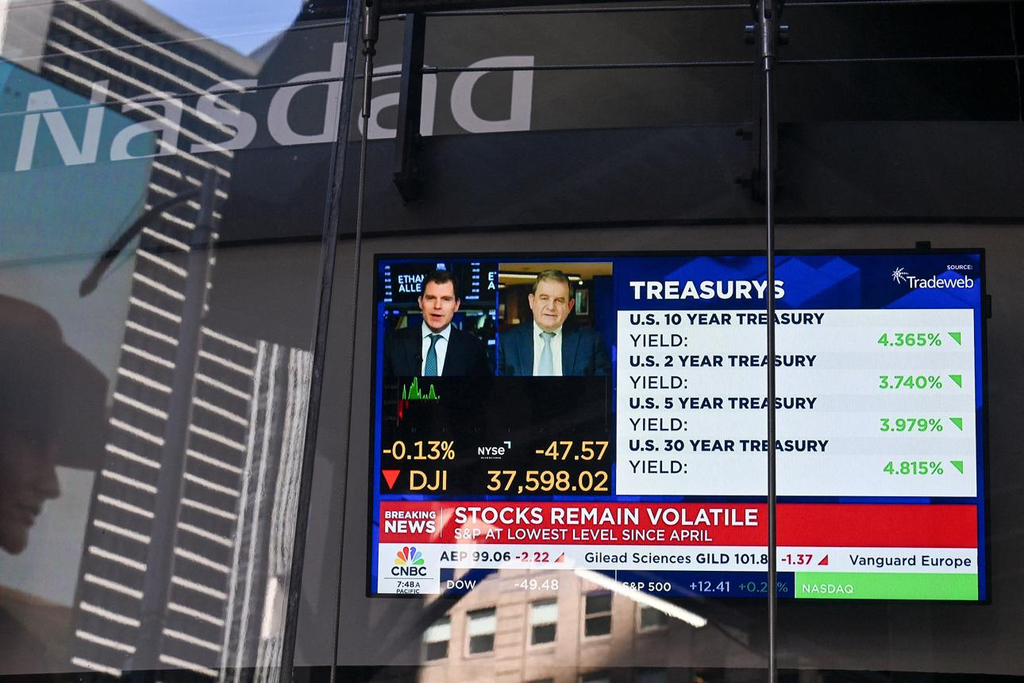
Long-term mortgage rates are heavily influenced by the bond market, particularly movements in U.S. Treasury yields. Expectations for inflation, economic growth, government borrowing, investor demand and other factors can influence Treasury yields and, in turn, mortgage pricing.
That explains why mortgage rates can rise even when investors are debating whether the Federal Reserve might eventually lower short-term interest rates.
Current market conditions illustrate the point. Reuters reported that the recent increase in mortgage rates has coincided with higher Treasury yields and concerns involving government borrowing, inflation and competition for capital from large AI infrastructure investments. The benchmark 10-year Treasury yield recently reached 4.818%, its highest level since November 2023, before easing to 4.744%.
For home buyers, the practical takeaway is more important than the financial-market mechanics:
Don’t assume a future Fed move will automatically produce a dramatically cheaper mortgage.
Mortgage rates can respond to many forces, and they can move in either direction before a buyer ever reaches closing.
Does a 6.71% Rate Mean You Should Wait to Buy?
Not necessarily.
Waiting can make sense if the current payment would leave you financially stretched. But waiting solely because you believe mortgage rates must fall can also backfire.
Consider two hypothetical buyers.
Buyer A can comfortably afford a $350,000 home today. They have stable income, an emergency fund, manageable debt and enough cash for the down payment and closing costs. They find a home they expect to own for at least seven to 10 years.
Buyer B is already stretching to afford a $500,000 property. A modest increase in taxes, insurance or maintenance would make the budget uncomfortable. Buyer B is counting on refinancing quickly if rates fall.
Those buyers should probably reach different conclusions even though they face exactly the same 6.71% market.
The important issue is financial resilience, not whether today’s headline rate feels attractive compared with rates from several years ago.
A home purchase is usually a long-term decision. Trying to predict the exact bottom of mortgage rates is extremely difficult. A buyer who can comfortably afford the home today may be better positioned than someone who waits for a hypothetical lower rate but faces a higher home price, stronger competition or different inventory conditions later.
What If Mortgage Rates Fall After You Buy?
This is one of the most common questions prospective buyers ask in a higher-rate environment.
If you purchase with a fixed-rate mortgage and market rates later decline enough to justify the costs, refinancing could potentially lower your interest rate or monthly payment.
But refinancing is not automatic, and it is not free.
A homeowner needs to consider closing costs, the new interest rate, the remaining loan balance, the remaining loan term and how long they intend to keep the property.
For example, imagine you purchase at 6.71% and several years later can obtain a meaningfully lower rate. A refinance could potentially improve your monthly cash flow. But if the savings are small and the transaction costs are substantial, refinancing may not make financial sense.
The better strategy is to make today’s purchase work without requiring a future refinance to rescue the budget.
If rates eventually improve, that can become an opportunity rather than a necessity.
Should You Buy a Home With a 6.71% Mortgage or Keep Renting?
There is no universal answer.
Renting can provide flexibility and eliminate many direct responsibilities associated with homeownership. Buying can provide long-term housing stability and the opportunity to build equity.
The comparison should include more than rent versus mortgage principal and interest.
A serious rent-versus-buy analysis should consider:
- Monthly mortgage principal and interest
- Property taxes
- Homeowners insurance
- HOA fees
- Mortgage insurance, if applicable
- Maintenance and repairs
- Closing costs
- Expected length of ownership
- Opportunity cost of the down payment
- Local rent growth
- Expected home-price changes, without assuming appreciation
A buyer planning to stay for 10 years may view upfront transaction costs very differently from someone who expects to relocate in two or three years.
This is why national averages can only take you so far. Housing markets differ dramatically across the United States, and the right decision depends heavily on the individual household and local market.
How Much Home Can You Afford at 6.71%?
A mortgage calculator can tell you what a payment would be. It cannot determine what payment is healthy for your household.
A more responsible approach is to work backward from your complete monthly budget.
Start with your after-tax income and subtract recurring expenses such as food, transportation, utilities, insurance, student loans, credit cards, childcare and savings. Then consider the complete cost of homeownership.
For example, a household earning a strong salary may technically qualify for a large mortgage but still decide that a smaller loan provides a better lifestyle.
That distinction between qualifying and comfortably affording a home is crucial.
A lender evaluates your financial profile according to underwriting standards. You have to live with the payment.
Should You Put 20% Down?
A 20% down payment can reduce the loan balance and may eliminate private mortgage insurance on many conventional loans, but it is not automatically the best choice for every buyer.
Putting $100,000 down on a $500,000 home, for example, leaves less cash available for emergencies, repairs and other financial goals.
A buyer who empties their savings account to reach 20% may have a lower monthly payment but a weaker financial safety net.
On the other hand, a larger down payment reduces borrowing costs and can improve monthly affordability.
The right amount depends on your cash reserves, loan program, credit profile, income stability and broader financial objectives.
The key is to avoid treating 20% as a magic number.
How Much Does Credit Score Matter?
Your actual mortgage rate is personal.
Freddie Mac’s national average should therefore be viewed as a market benchmark rather than a guaranteed offer. Lenders consider factors including credit history, loan characteristics, property details and borrower risk.
That makes improving your financial profile before applying potentially valuable.
Before shopping seriously, buyers should consider:
- Checking their credit reports for errors.
- Paying bills on time.
- Avoiding unnecessary new debt.
- Keeping credit-card balances manageable.
- Saving sufficient cash for the down payment and closing.
- Comparing multiple lenders rather than accepting the first quote.
The objective is not simply to find the lowest advertised number. It is to find a mortgage whose rate, fees, points, term and features make sense together.
Should You Lock Your Mortgage Rate?
A rate lock protects a borrower from market movements for a specified period under the lender’s terms.
This can be valuable when you’re under contract and approaching closing because mortgage rates can move between application and settlement.
But locking a rate also creates questions. How long is the lock? Is there a fee? What happens if closing is delayed? Does the lender offer a float-down option if rates decline?
The right timing depends on your transaction and lender.
One thing is clear: trying to perfectly predict daily mortgage movements is rarely a productive strategy. The more important objective is making sure the rate and payment are acceptable before committing.
What Should Buyers Look for Beyond the Interest Rate?
A mortgage rate is only one part of the financing decision.
Two lenders could advertise similar rates but produce different total costs because of differences in points, origination charges and other fees.
The Consumer Financial Protection Bureau recommends using standardized mortgage disclosures to compare loan offers. A Loan Estimate provides important information about the proposed loan, while the Closing Disclosure provides final loan terms and costs.
Before closing, buyers should carefully compare the final paperwork with what they originally expected.
The CFPB says borrowers must receive a Closing Disclosure at least three business days before closing, giving them time to review the final terms and costs.
Pay particular attention to:
- Interest rate
- Monthly principal and interest
- Estimated total payment
- Loan amount
- Closing costs
- Cash required to close
- Escrow amounts
- Mortgage insurance
- Prepayment penalties, if any
- Changes from the original Loan Estimate
If something looks different, ask questions before signing.
Is 6.71% a High Mortgage Rate Historically?
The answer depends on the historical period being used.
Today’s rate is considerably higher than the unusually low mortgage rates available during the pandemic-era period. But mortgage rates have also been much higher historically.
That historical context is useful because it prevents buyers from treating a recent low-rate period as the permanent baseline.
The more relevant question for someone buying in 2026 is not whether today’s rate is higher than an exceptional period several years ago.
It is whether the buyer can comfortably own the home under today’s financing conditions.
If the answer is yes, the purchase can still make sense. If the answer is no, a lower-priced property, larger down payment, different loan structure or waiting period may be more appropriate.
What Could Happen to Mortgage Rates Later in 2026?
Nobody knows the exact path.
Mortgage rates will continue responding to economic data, inflation expectations, Treasury yields, Federal Reserve policy expectations and broader financial-market conditions.
Recent developments demonstrate how quickly expectations can change. Reuters reported that Federal Reserve Governor Christopher Waller indicated that continued improvement in inflation could support holding rates steady at the September meeting rather than raising them. At the same time, financial conditions remain relatively tight, particularly for housing and other interest-sensitive purchases.
For buyers, that uncertainty argues for flexibility rather than prediction.
If your purchase only works at 5.5%, waiting may be sensible.
If it works at 6.71% and you have strong finances, waiting for a lower number could expose you to other changes in home prices, inventory or competition.
A Practical 2026 Home-Buying Checklist
Before making an offer in today’s rate environment, ask yourself:
- Can I comfortably afford the total monthly housing cost?
- Will I still have an emergency fund after closing?
- How stable is my income?
- How long do I realistically expect to stay?
- Have I compared multiple lenders?
- Am I comparing APR and total loan costs, not just the advertised rate?
- Would the purchase still work if rates never fell?
- Could I handle a major repair without taking on expensive debt?
- Have I reviewed property taxes and insurance carefully?
- Am I buying because the home fits my needs, rather than because I fear missing out?
If you can answer these questions confidently, a 6.71% mortgage does not automatically eliminate homeownership from consideration.
When Waiting May Actually Make More Sense
There are legitimate reasons to postpone a purchase.
If the down payment would consume nearly all your savings, waiting can strengthen your financial position.
If your credit needs improvement, spending time reducing debt or correcting errors could potentially improve your financing options.
If your job situation is uncertain, taking on a large fixed housing obligation may be premature.
And if the only way you can afford the house is by assuming mortgage rates will soon fall and you will refinance, the purchase deserves another look.
The best time to buy is not necessarily when rates reach a particular number. It is when the home, financing and household budget line up.
When a 6.71% Mortgage Could Still Be Reasonable
For some households, buying today can still be rational.
A buyer with stable employment, substantial reserves, manageable debt and a long expected ownership period may reasonably decide that today’s rate is acceptable.
The buyer may also negotiate with sellers for concessions, compare lenders, consider different loan terms or select a less expensive property.
In a changing rate environment, flexibility can be more valuable than trying to forecast the next mortgage-rate headline.
A strong purchase is one that works under reasonable assumptions—not one that requires everything to go perfectly.
The Right Way to Think About 6.71% Before You Make an Offer
The latest mortgage-rate increase is meaningful, but it should not be interpreted in isolation.
The national average 30-year fixed rate is now 6.71%, compared with 6.66% a week earlier and 6.50% a year earlier. That makes financing more expensive than it was during periods when buyers became accustomed to exceptionally low borrowing costs.
But a mortgage decision is ultimately personal.
The strongest 2026 buyer is not necessarily the person who predicts the next rate move correctly. It is the person who understands the complete cost of the purchase, compares financing options, maintains adequate reserves and chooses a payment that remains manageable even if economic conditions change.
The Mortgage Math That Matters Most
- 6.71% is the latest national average 30-year fixed mortgage rate reported by Freddie Mac as of September 3, 2026.
- Your personal mortgage quote can differ substantially from the national average.
- The monthly mortgage payment is only part of the true cost of owning a home.
- A larger down payment can reduce borrowing costs but may leave you with less emergency cash.
- Buying today should not depend on the assumption that you will definitely refinance later.
- Compare lenders using the full Loan Estimate, not just the advertised interest rate.
- Review your Closing Disclosure carefully before closing; federal rules generally require it at least three business days beforehand.
- The best buying decision depends on income stability, cash reserves, debt, local housing costs and expected ownership period.
- Mortgage rates can change independently of the Federal Reserve’s short-term policy decisions.
- A financially comfortable purchase can make sense even when rates are higher than recent historical lows.
FAQ: Mortgage Rates and Home Buying in 2026
1. Is 6.71% a good mortgage rate in 2026?
It is better to view 6.71% as a current national benchmark rather than labeling it universally good or bad. Freddie Mac reported an average 30-year fixed rate of 6.71% on September 3, 2026. Your actual offer depends on your financial profile and loan characteristics.
2. Should I buy a house if mortgage rates are 6.71%?
You may still want to buy if the complete payment fits comfortably within your budget, you have adequate cash reserves and expect to stay for several years. If the payment requires financial stretching, waiting or choosing a less expensive home may be more sensible.
3. Will mortgage rates fall before the end of 2026?
There is no reliable way to know the exact path of mortgage rates. They respond to Treasury yields, inflation expectations, economic conditions and financial markets, among other factors.
4. Should I wait for mortgage rates to drop?
Waiting can make sense if today’s payment is unaffordable or your finances need improvement. But waiting purely for a lower rate involves uncertainty because home prices, inventory and competition can change at the same time.
5. What is the monthly payment on a $400,000 mortgage at 6.71%?
A $400,000 30-year fixed mortgage at 6.71% would have principal-and-interest payments of approximately $2,581 per month. Taxes, insurance, mortgage insurance and HOA fees would be additional.
6. Does the Federal Reserve control mortgage rates?
Not directly. Mortgage rates are influenced heavily by longer-term bond-market conditions, including Treasury yields. Federal Reserve policy can influence financial markets and rate expectations, but a Fed decision does not mechanically determine the 30-year mortgage rate.
7. Is a 15-year mortgage worth considering at today’s rates?
A 15-year mortgage can reduce the time required to repay the loan and generally results in less total interest, but the monthly payment is substantially higher. Freddie Mac reported an average 15-year fixed rate of 6.04% on September 3, 2026.
8. Should I pay points to get a lower mortgage rate?
Points can reduce an interest rate in exchange for an upfront cost. Whether they make sense depends on how much the rate reduction saves each month and how long you expect to keep the mortgage.
9. How many mortgage lenders should I compare?
There is no magic number, but comparing multiple lenders can reveal differences in rates, fees and loan terms. The CFPB specifically encourages consumers to use Loan Estimates to compare mortgage offers.
10. What should I check before closing on my mortgage?
Review the interest rate, loan amount, monthly payment, closing costs, cash required to close, escrow amounts and other terms. The CFPB recommends comparing the Closing Disclosure with your most recent Loan Estimate and reviewing the final documents before signing.